Los Angeles houses do not follow a single pattern. Spanish revival parcels sit next to mid-century boxes, multi-family walk-ups neighbor modern infill, and many roofs have been stitched together over decades. For a metal roofing contractor in Los Angeles, that variety is the defining challenge. A roof with multiple hips, intersecting valleys, dormers, chimneys, and offsets can look impossible until someone who understands metals, geometry, and moisture control walks the line and makes a plan.
I have worked on roofs that forced us to rethink how panels run, reconsider standing seam exposure, and redesign flashing details on the fly. Those jobs revealed three practical truths: metal behaves predictably when detailed correctly, complex rooflines reveal weak points in other trades, and a good contractor anticipates the water flow before a single screw goes in. This piece explains how experienced teams approach that work, the decisions that matter, and what homeowners in Los Angeles should look for when hiring a metal roofing contractor.
Why complexity matters A complicated roofline concentrates risk. Every intersection, step, and angle is a place water can arrive and stall. In Los Angeles, storms are sporadic but intense. Moisture intrusion shows up not only during heavy rains, but months later as rot, mold, or failed insulation performance. Metal roofing is excellent at shedding water, but only if seams, flashings, and penetrations are designed and executed to work together. I once saw a recently replaced clay tile roof that leaked at a Learn more single dormer valley because the ridge-to-dormer junction had been left as a generic detail. With metal, those junctions are more exposed visually, so they tend to be done right, but the margin for small errors is still narrow.
Assessing the roof before installing metal The best projects start at the clipboard, not the ladder. A thorough assessment for a metal roofing contractor in Los Angeles covers structure, sheathing condition, roof slope, existing flashing, and how previous repairs were handled. It also considers neighboring trees, HVAC platforms, and eaves where marine air and salt spray may accelerate corrosion if inappropriate materials are chosen.
On a recent Victorian conversion in Echo Park, the homeowner had assumed we would simply overlay metal panels on existing plywood. Our evaluation revealed large areas of delamination in the sheathing and a sagging ridge that needed re-framing. Tackling those structural issues first added a week to the schedule, but eliminated callbacks later, and resulted in a warranty we could stand behind.
Designing a system for complicated geometry Design is where experience shows. For straightforward gable roofs, long, continuous metal panels oriented from ridge to eave work well. For complex rooflines, contractors choose different strategies depending on scale and aesthetics.
Standing seam panels remain the go-to for long runs and modern looks. Their concealed fasteners reduce leak paths, and snap-lock profiles simplify field work. But on roofs with multiple small planes, custom-fabricated panels or modular panels that break at logical seams are often smarter. Short panels allow work around dormers and hips without awkward seams near a valley.
On a home with an irregular footprint and several roof offsets, we used tapered metal shingles in a copper finish to match the period character while allowing small, irregular shapes to be field-fitted. Fabrication took longer and cost more than stock panels, but the results were tight lines and reliable transitions where a single mis-placed panel would have caused repeat visits.
Handling valleys, hips, and intersecting planes Valleys are the decisive detail for many complex roofs. There are two main valley approaches with metal: open metal-lined valleys or closed valleys where panels overlap into a concealed metal pan. Open metal-lined valleys are serviceable on wider valleys where debris clearance matters. Closed valleys work well in areas prone to wind-driven rain because they minimize the chance of splash-back at panel joints.
For hips, prefabricated hip caps are efficient, but on steep or compound hips, we often fabricate caps on-site. That allows the cap to follow compound geometries without distorting. At intersections, especially where a steep plane meets a less steep one, we pay attention to water velocity. If a steep plane will channel a torrent into a valley, we specify larger gauge metal in the valley pan and additional fastener reinforcement at support points.
Penetrations and roof-mounted items Skylights, chimneys, vent stacks, and HVAC curbs break the continuity of any roof. An experienced metal roofing contractor in Los Angeles treats each penetration as a project within the project. Flashing methods vary: some penetrations get a continuous counterflashing integrated with field panels, others use prefabricated boots and step flashing detailed to accommodate thermal movement.
For large curbs such as rooftop HVAC units, we sometimes design a separate membrane curb under the metal flashing to serve as a secondary water barrier. That doubles down on protection and reduces the risk of mechanical damage to metal during unit maintenance. In multi-family projects where rooftop foot traffic is expected, we coordinate with mechanical teams to place durable walk pads and specify protective transitions so the metal is not the sacrificial element.
Material selection in a corrosive environment Los Angeles is not uniformly corrosive, but proximity to the ocean matters. For coastal neighborhoods, 316 stainless steel or aluminum-manganese alloys avoid galvanic and chloride-driven corrosion. Galvanized steel with high zinc coatings can be cost-effective inland, but we use stricter material specs within a few miles of the coast.
Color and finish matter too. PVDF painted finishes resist chalking and hold color longer under UV exposure. If a homeowner wants a patinaed finish, like copper, we discuss the expected timeline and maintenance. Copper will change appearance over years and can stain adjacent materials if runoff is not controlled. When we installed copper accents on a Brentwood home, we routed flashings so patina runoff missed stucco walls, preventing ugly staining.
Fastening strategy and thermal movement Metal expands and contracts with temperature. On a Los Angeles roof that can see a 70 degree difference between night and day over a year, that movement becomes significant. Contractors choose fasteners and clip systems to allow longitudinal movement while restraining wind uplift.
Hidden-clip standing seam systems excel here because clips secure panels but allow sliding. For exposed-fastener systems, we design screw spacing and use neoprene-backed washers that retain seal under repeated thermal cycling. A critical judgment call is when to use a rigid fastening pattern versus a sliding clip pattern. On long continuous panels over 40 feet, sliding systems are almost always the right choice to avoid oil-canning and seam stress.
Coordination with other trades and sequencing Complex roofs rarely exist in a vacuum. Masonry chimneys may need repointing, chimneys sometimes require caps or stainless-steel liners, and gutters and drainage upgrades often accompany the roof replacement. A metal roofing contractor in Los Angeles coordinates sequencing to prevent conflicts. For instance, installing gutters before certain flashings can force the crew to redo work. We schedule flashing, soffit repairs, and gutter installation so each trade completes rough work before metal panels go on.
On a duplex we worked on in Silver Lake, new rooftop solar was part of the plan. We engaged the solar contractor early to locate rails on panel seams to avoid cutting panels later and designed penetrations with integrated flashing for the standoffs. The upfront planning avoided three return visits and saved the owner money.
Quality control and testing Once panels are in place, we test vulnerable details visually and with water when practical. Static inspections catch fastener torque issues and alignment problems. On high-stakes jobs, we run a simulated water test at critical junctions, directing water from a hose to valleys and drainage points to verify the flashing works under pressure. This is particularly important for complex rooflines where visual coverage obscures how water moves in a storm.
Documentation and warranty Reputable contractors document materials, fastener patterns, clip spacing, and special details. That documentation proves invaluable when checking performance years later. We provide photographs of key steps and a scope list that ties warranty obligations to the installed system and to the maintenance tasks the homeowner must perform. Metal roofs are durable, but gutters need clearing, sealants need inspection, and penetrations need periodic checks.
Questions to ask a prospective metal roofing contractor
- What specific experience do you have with rooflines like mine, and can you show photos of finished work? Which materials and gauges do you recommend for my location, and why? How will you handle valleys, hips, and penetrations unique to this roof? What is your fastening and thermal movement strategy for long panel runs? What warranties and documentation will I receive, and what homeowner maintenance is required?
These five questions are not exhaustive, but they cut to the core of whether a contractor thinks in terms of details and systems rather than just panels.
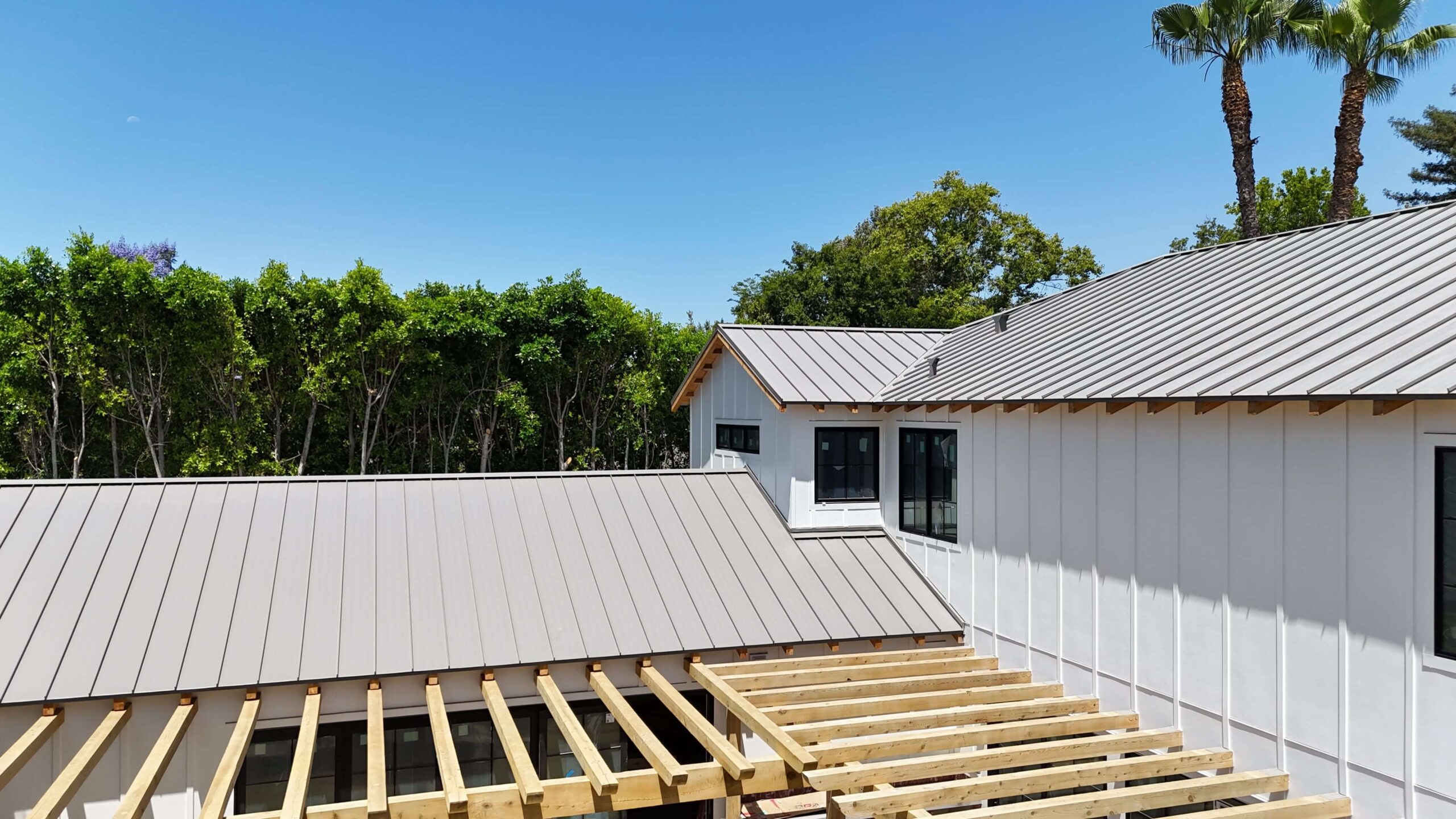
Trade-offs and budget realities Not every homeowner can afford customized copper work or full re-framing. Budget choices change the approach. On a tighter budget, a contractor might recommend a modular metal shingle over standing seam to reduce fabrication labor, or they might prioritize replacing only the most deteriorated sheathing sections rather than all sheathing. Those are acceptable compromises if they are documented and the owner understands the longevity trade-offs.
For example, using a heavier gauge in valleys and a lighter gauge on field panels can control cost while protecting the most vulnerable area. The trade-off is a slight visual mismatch and a potential need to replace field panels sooner if they suffer denting in storms. The key is that the decision is deliberate, not accidental.
Why some homeowners choose a specialist like Eclipse Metal Metal Roofing in Los Angeles Roofing Specialist contractors bring repeatable details and a supplier network for prefinished materials and custom flashings. A company like Eclipse Metal Roofing, which focuses on residential and complex urban roofs, often has access to fabrication shops that can pre-bend panels and caps to exact angles, reducing field fitment time and error. That matters when streets are narrow and staging space is limited, a common condition in Los Angeles.
A specialist also tends to keep a library of details tested on previous projects. That institutional knowledge shortens the learning curve on unusual geometries. If you value predictability and fewer call-backs, a focused metal roofing contractor in Los Angeles is worth the premium. If budget is the only driver, discuss phased replacements and protective interim flashing with whoever you hire.
Common mistakes and how an experienced contractor avoids them Underestimating thermal movement, using exposed fasteners where sliding clips are needed, and poor valley design are the most frequent causes of premature issues. Another common error is ignoring the substrate. Installing high-quality metal over rotten sheathing is like driving nails into soft clay; it might hold for a season, but not for the life of the roof.
Experienced teams avoid these errors by defining tolerances and mock-ups before committing. We sometimes install a short mock section at a critical intersection to verify aesthetic and mechanical performance. A two-day mock-up can prevent months of headaches and multiple callbacks.
Final considerations for homeowners Pick someone with documented work on similar rooflines, insist on clear material specifications, and get a written plan for how junctions and penetrations will be treated. Expect to pay more for bespoke work, but weigh that against the lifetime cost of repairs. Ask contractors how they will protect surrounding landscaping and finishes during the work, because many callbacks come from incidental damage rather than the roof itself.
Metal roofing rewards patience and a bit of foresight. When a contractor studies the roof, maps water paths, selects the appropriate materials, and sequences the work with other trades, the result is a roof that looks good and performs for decades. In Los Angeles, where weather, architecture, and site constraints vary by neighborhood, that level of care separates the contractors who do occasional metal work from those who are true specialists at handling complex rooflines. If you want a roof that stands up to storms, time, and municipal scrutiny, look for evidence of that care in references, details, and the questions the contractor asks you.
Eclipse Metal Roofing
2140 Westwood Blvd Unit 209, Los Angeles, CA 90025
+1 (310) 490- 9695
[email protected]
Website: https://eclipsemetalroofing.com